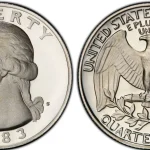
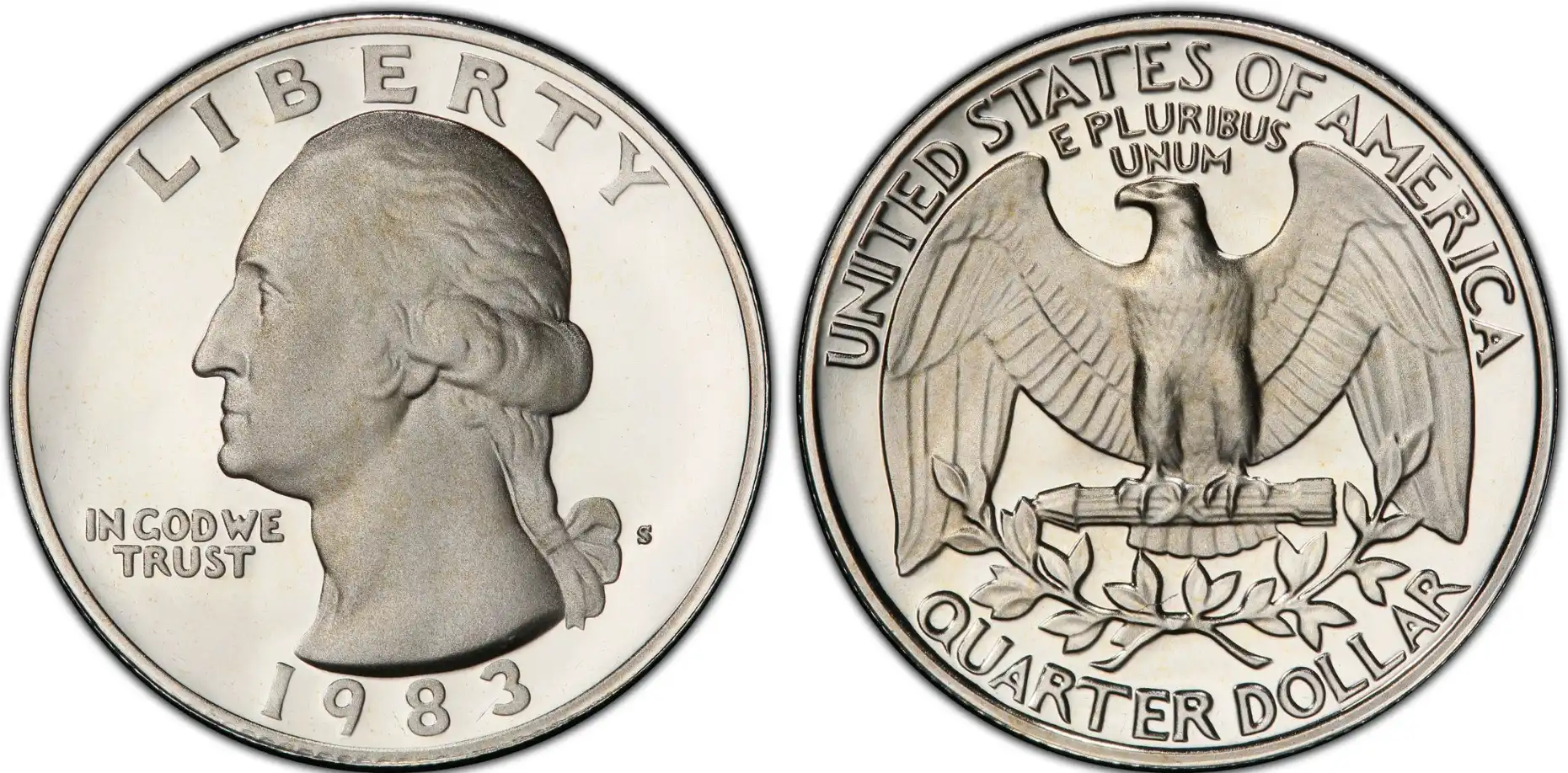
The regular 1983 quarter carries a low $0.50 market value today. Clean specimens showing minimal wear can sell for $15 easily. Top condition pieces can fetch a massive price over $1000 at public auctions. Condition matters more than almost anything else when pricing a 1983 quarter.
Technical Parameters
Coin specifications must be known to every buyer. These details help spot fake coins.
- Base metal mixture
- Official weight parameters
- Standard diameter size
- Exact thickness measurements
- Reeded edge style
| Parameter | Value |
| Coin value | $0.25 |
| Coin weight | 5.67 grams |
| Metal mixture | Copper-nickel metal |
| Coin diameter | 24.26 millimeters |
| Coin thickness | 1.75 millimeters |
| Edge type | Reeded |
Scarcity Reasons and Value Effect
Heavy transport trucks carried these bags over long distances. Rough road conditions caused coin damage inside the bags. Coins hit each other constantly during transport. This rubbing created many surface scratches.
Finding an undamaged piece is a difficult task today. Professional coin buyers pay big money for clean surfaces. Perfect items are extremely rare now.
Let’s analyze seven main coin scarcity reasons:
- No mint sets
- Direct bank delivery
- Heavy bag friction
- Active business use
- Low public saving
- High circulation wear
- Fast metal damage
Most 1983 quarters have scratches. Collectors call these bag marks. Bad bag marks reduce coin value fast. Perfect coins must always have zero bag marks.
Mint Marks and Coin Value Ranges
Mint marks tell us where workers made the coin. You can find the letter on the front side. It sits near the Washington bottom hair line.
Philadelphia Mint Mark P
Philadelphia workers used the letter P. This mint mark is famous for weak coin details. Old machinery parts created soft images on the metal.
Coin prices for this mint mark vary:
- Grade MS63 coin price: $8
- Grade MS65 coin price: $35
- Grade MS67 coin price: $1150
- Auction record value: $1410
Weak details are common on Philadelphia coins. Metal dies wore out quickly. Many coins have blurry letters. Buyers pay much more for sharp details.
Denver Mint Mark D
Denver workers used the letter D. This facility produced cleaner coins than Philadelphia. Details look much sharper.
Coin prices for this mint mark vary:
- Grade MS63 coin price: $5
- Grade MS65 coin price: $22
- Grade MS67 coin price: $350
- Auction record value: $1300
Denver coins had better production quality. Fewer bag marks exist on Denver pieces. Still, finding MS67 specimens is very hard.
San Francisco Mint Mark S
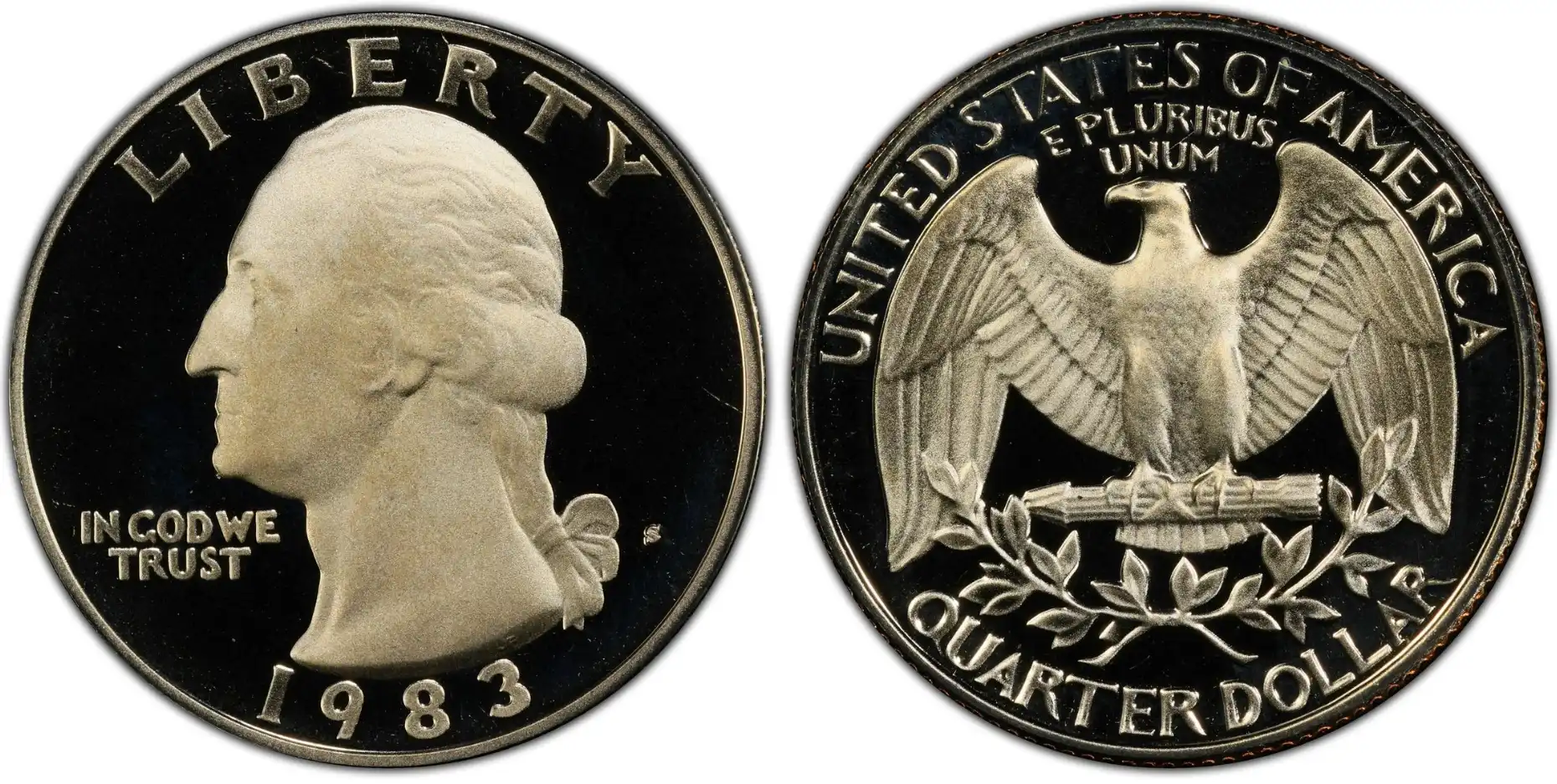
San Francisco workers used the letter S. This mint made special collector coins. These coins are called proof coins. Workers used polished metal parts to create a mirror background.
Coin prices for this mint mark vary:
- Grade PR67 coin price: $8
- Grade PR69 coin price: $12
- Grade PR70 coin price: $45
- Auction record value: $450
Proof coins did not go into circulation. Workers packed them in plastic cases. They remain cheap because many survived.
| Coin Grade | Philadelphia P Value | Denver D Value | San Francisco S Value |
| VG8 Very Good | $0.25 | $0.25 | No data |
| VF20 Fine | $0.75 | $0.50 | No data |
| AU50 About Uncirculated | $3.50 | $2.00 | No data |
| MS63 Uncirculated | $8.00 | $5.00 | No data |
| MS65 Choice Uncirculated | $35.00 | $22.00 | No data |
| MS66 Gem Uncirculated | $95.00 | $55.00 | $5.00 |
| MS67 Superb Uncirculated | $1150.00 | $350.00 | $8.00 |
| MS68 Rare Uncirculated | $3200.00 | $1500.00 | $15.00 |
| PR69 Proof Choice | No data | No data | $12.00 |
| PR70 Proof Perfect | No data | No data | $45.00 |
How to Grade a Quarter Yourself
Determining coin condition requires specific steps. You must check key design areas.
- Use magnifying glass
- Find bright light
- Check high points
- Look for luster
- Count surface scratches
- Inspect coin edges
Washington Hair Details
Hair lines above the ear show wear first. Daily pocket use rubs these lines flat. Clear hair lines mean high coin value. Smooth metal areas indicate a low grade. Look closely at the curls. Each curl must be separate.
Eagle Breast Feathers
Reverse side details are very important. Check the bird chest. Sharp feathers indicate a top quality coin. Flat bird chest areas mean low market value. Feathers wear down from rubbing. Inspect the bird chest center.
Coin Surface Cleanliness
Flat metal areas must always have original shine. Heavy scratches reduce the coin price. Dark spot marks lower the coin grade. Original luster must be present. Luster is the metal light wheel effect.
Mint Error Varieties
Production mistakes make coins very valuable. Collectors pay high prices for factory errors. These errors are highly rare.
- Double die reverse
- Off-center strike
- Broadstruck error
- Wrong metal error
- Double strike error
Double Die Reverse
This error happens when the stamp hits the metal twice. Letters show a clear double line. Look closely at the reverse words.
- MS65 error value: $400
- Auction record value: $1200
Doubling is easy to see under a simple lens. Check the words Quarter Dollar first.
Off-Center Strike
Machine parts sometimes hold the metal sheet wrong. Stamp hits only a part of the metal circle.
- 30% off-center value: $150
- Off-center no date: $25
Coin must show the 1983 date to have high value. Blank areas must be clean.
Broadstruck Error
This error occurs when the metal collar fails. Coin spreads out too wide. Edge remains flat and thin.
- Average broadstruck value: $65
- Gem broadstruck value: $210
Broadstruck coins look larger than normal quarters. They lack the standard reeded edge.
Price Trends
Market values show strong growth for top quality coins.
2024 price $850
2025 price $1050
2026 price $1410
This represents over 65% price increase. Lower grades do not show this rapid growth. Common MS63 coins only rose $1 recently. You should focus on high grade items only. High grade prices rise faster.
Financial Risks and Preservation
Bad storage choices destroy coin value instantly. Many people lose money by trying to improve coin looks.
- Avoid metal cleaning
- Avoid soft plastic
- Avoid humid indoor air
- Avoid bare hands
Cleaning Loss Example
One careless owner cleaned a 1983-P MS67 coin. Simple toothbrush scrubbing left tiny surface scratches.
Original value: $1150
Cleaned value: $15
Plastic Chemical Damage
Another collector used cheap soft plastic holders. Chemical holder gases damaged coin metal.
Original value: $350
Damaged value: $5
Use only safe hard plastic holders.
Proper Preservation Rules
- Use hard plastic coin capsules
- Keep capsules in dry rooms
- Always handle coins by edges only